The hidden technique beneath the Funeral Fog
“When you rehearse old songs as often as we did in those early years you begin to understand the patterns, and I think subconsciously I wanted to have some of the similarities from [De Mysteriis].” - Blasphemer, interviewed at Black Metal: Evolution of the Cult
This article is inspired by Dev Gohil's mythbusting lesson about de De Mysteriis Dom Sathanas opening riff. I recommend to watch it below so you can get the principle at play here, which can help also debunk how most people play the main riffs from Funeral Fog.
The wrongly played riffs are specifically the main melodic riff at 2:44 (after "Only dead trees are growing here...") but also the melodic riffs at the beginning starting at 0:26.
The riff after the dead trees
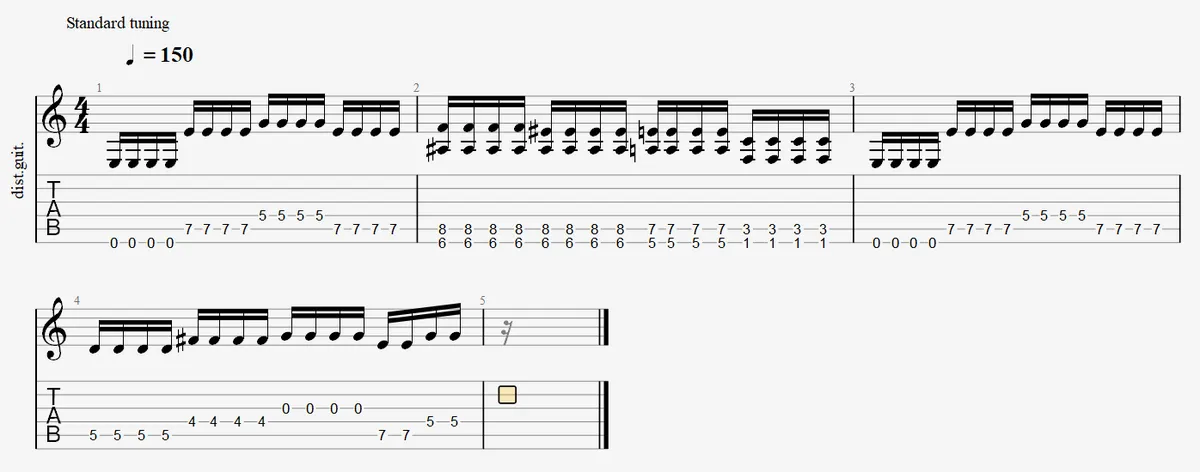
The typical version of this iconic riff you see since the dawn of GuitarPro and UltimateGuitar is this way (source: Ultimate Guitar):
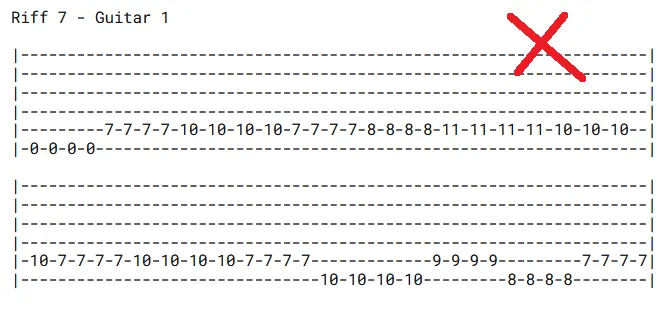
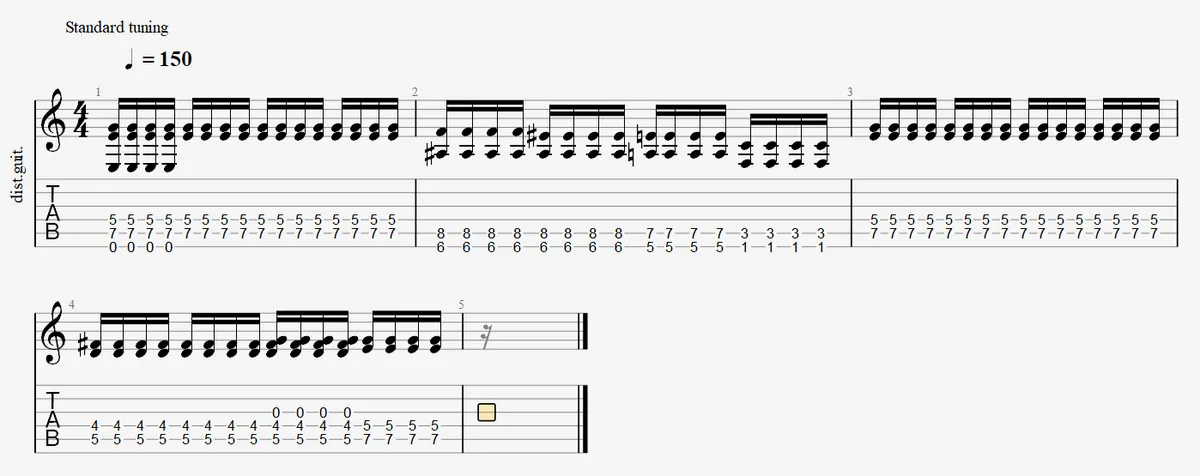
Following Dev Gohil's distinction, the riff above is being played as a melody over a E minor scale, while it should be played in the shape of arpeggios over chord shapes. In which way you can achieve this? Well, like this:
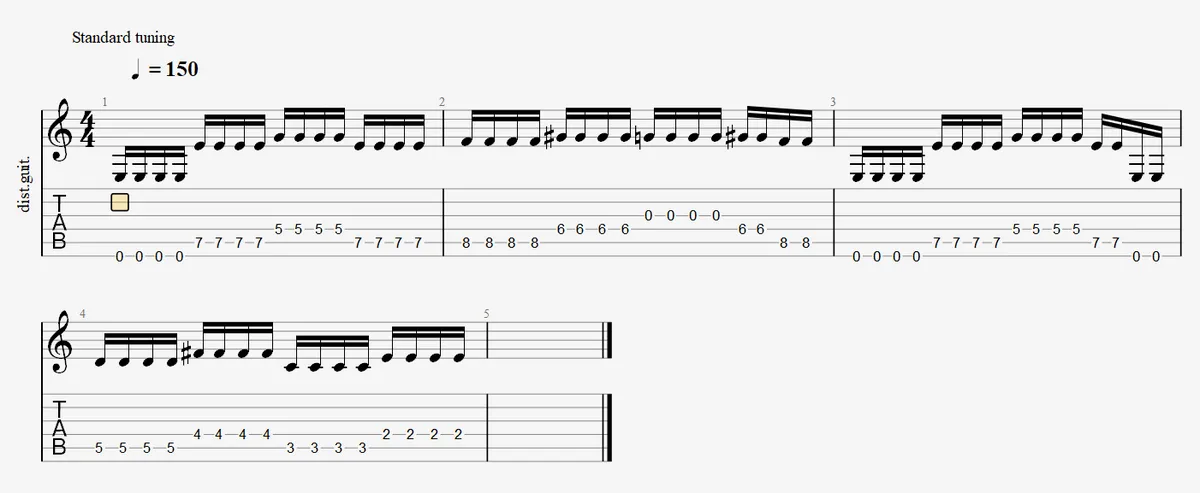
As you can apreciate, this arpegiated way of playing never plays adjacent notes in the same string. It always skip to next string, up or down. This makes it harder to play actually, and i think that explains why the "wrong" way is so popular. But what you also earn from playing it this way is that you get the "clinging notes" effect noted by Fenriz as quintessential to the guitar style pioneered by Euronymous and Snorre Ruch. You can try it by yourself to test how much atmosphere you get with this "true" way of playing it.
For those who doubt how "true" this is, it is basically the riffing technique explained by Snorre at the Helvete documentary, showing how doing tremolo with the hand hovering over like a mixer and go doing four picking in each string while climbing up and down the arpeggio. No more, no less.
Also, playing Funeral Fog or similar riffs under this technique lets you earn economy of movement with your left hand, because you have barely to move your fingers now. These shapes are minor thirds and major thirds, like inverted power chords, that take advantage of sounding fine with the open E and G strings. To get what i'm saying here, try playing this:
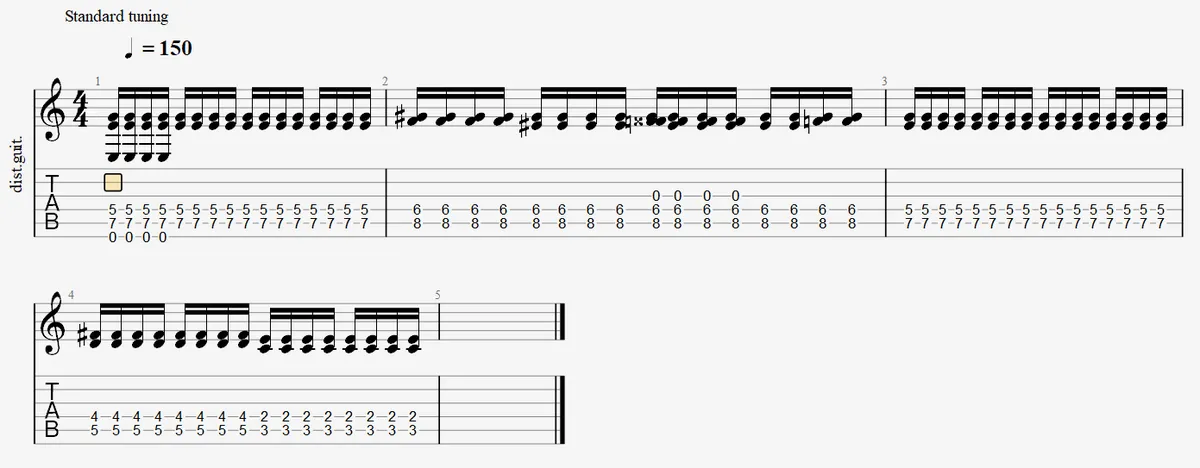
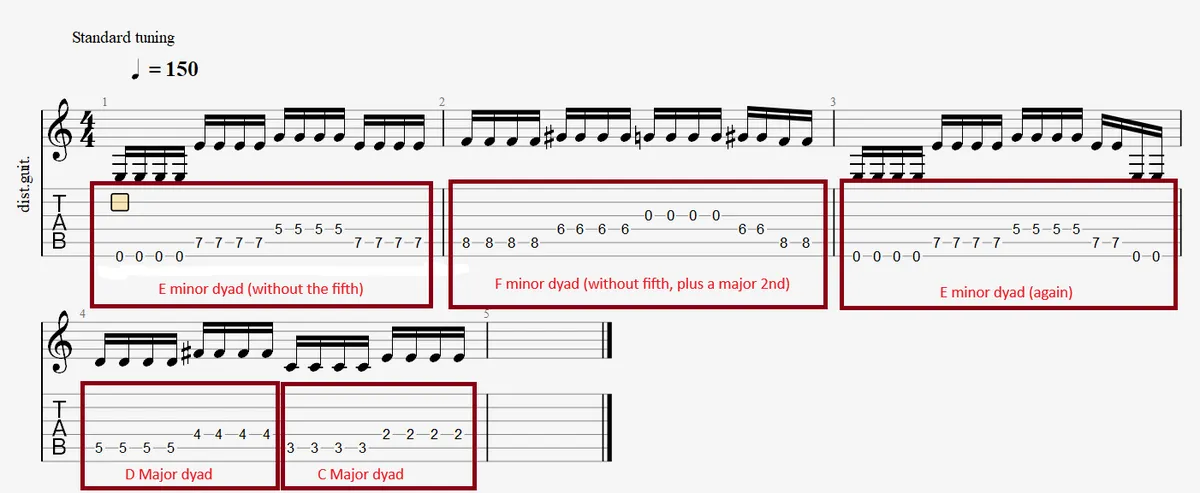
Now, playing the arpeggios is the same as this with the left hand, you only have to alternate the strings you are picking with your right hand. This is, in an arpeggio way instead of as a diatonic dyad riff. What's interesting here is that we start to unveil the genius behind this riff and how Euronymous came up with it actually. To make it even more clear, here the squares mark what chord you are making at each square:
The riff after the dead trees, encore
In a similar fashion, the second version of this same riff at 3:58 is also wrong in most tabs. As you have already noticed, this riff has a "call and response" structure, which goes "call-response-call-response". The mistaken tabs usually show only the first response as different, which goes playing some power chords. But actually the second response is also different, with a more complex pattern than the one at 2:44:
I share with you the diatonic riffing version too, so you can get better the shapes you should do with your left hand:
Ironically, this encore is only played correctly in the original Mayhem versions. Almost all covers and modern Mayhem live shows have this part of the riff wrong.
The melodic riff at the intro
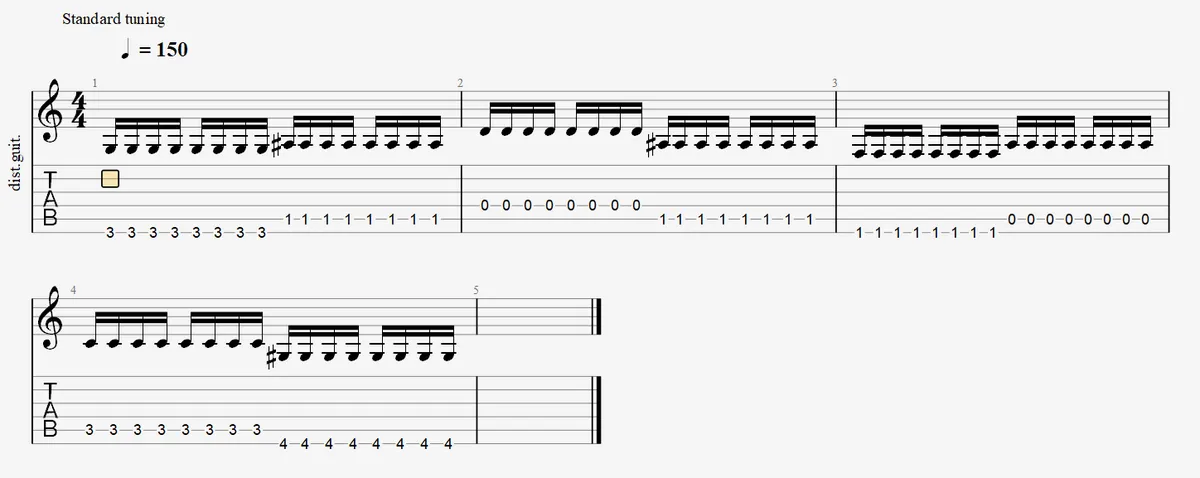
Now lets apply the same principles to the riff at 0:26. Most lessons and tabs show it like this:
Again, the same problem. It is played in a death-thrash way, like a melody over a minor scale. And, again, the correct way to play it is as tremolo-arpeggios over a minor third chord shape. Like this:
This way, you also earn the same clinging notes effect and atmosphere, besides the economy of movement. To help you get the underlying shapes, you can try playing the follow diatonic dyads version of this riff:
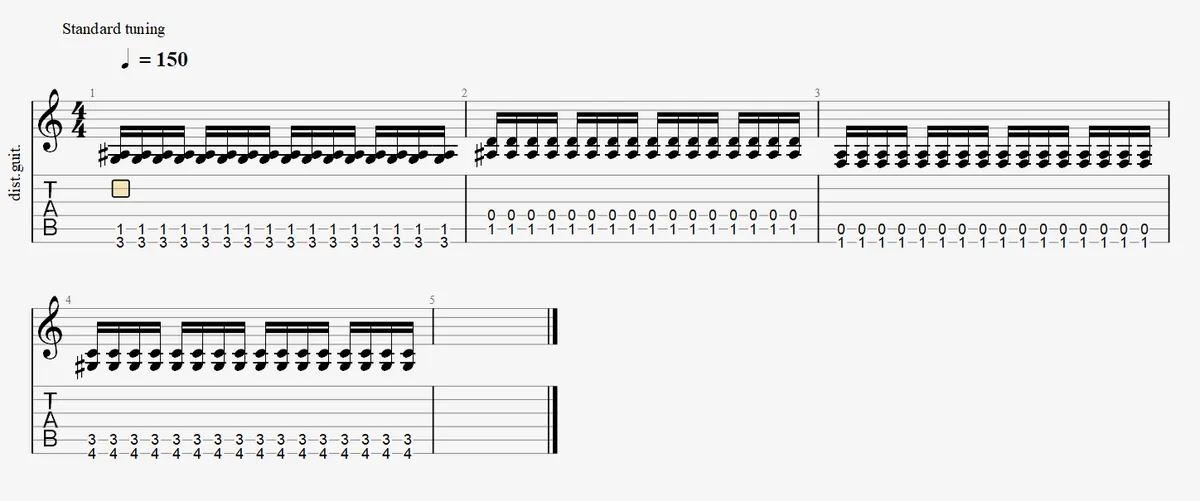
This is also interesting choice for a root chord of GA#D, which is also cool with playing the following open 4th string which is D, forming a G Minor triad. We are getting deeper not just into the actual chord shapes at the roots of Funeral Fog, but also to certain recurring patterns and tricks that influenced all black metal after it.
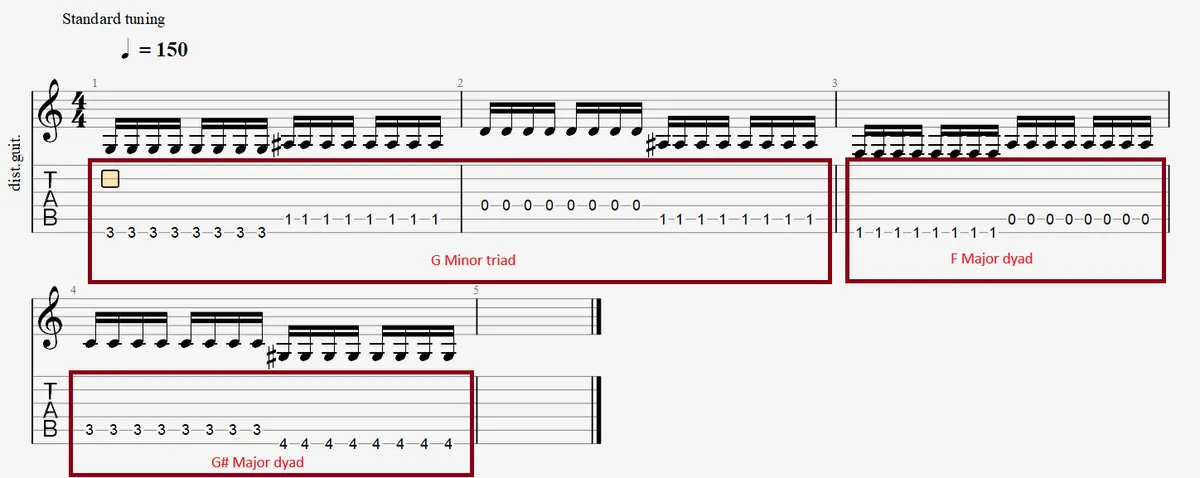
The melodic riff at the intro, encore
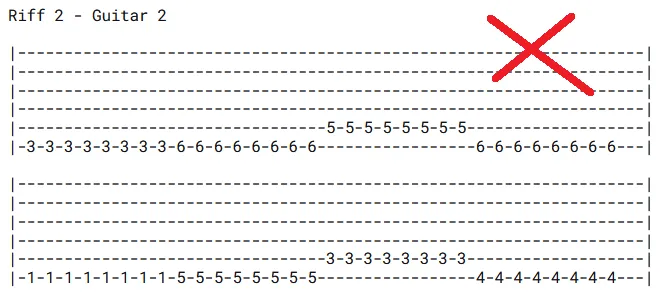
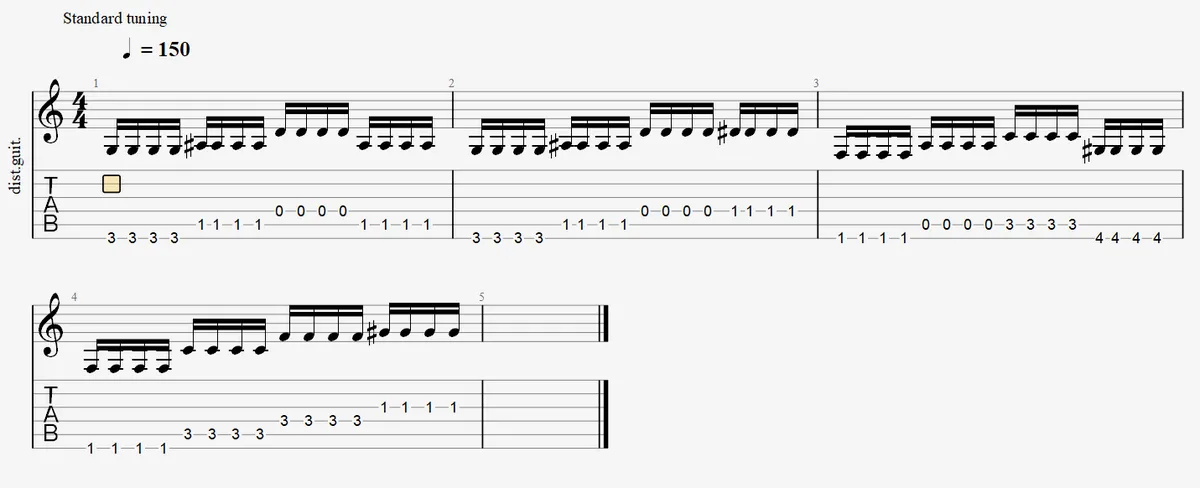
This riff also has an encore at 1:06, and is also poorly written in popular tabs, like this one:
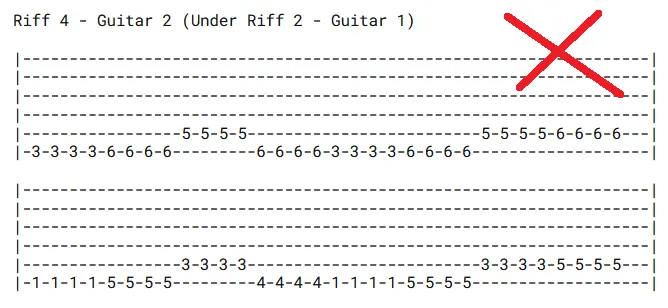
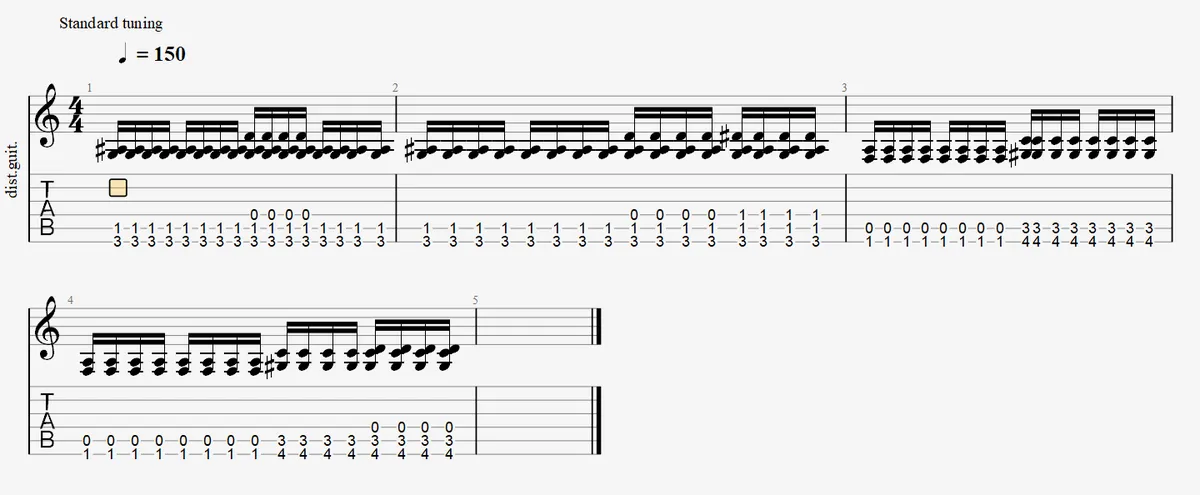
Thus, the correct way to play it is this (has two rounds, the second changes at the end):
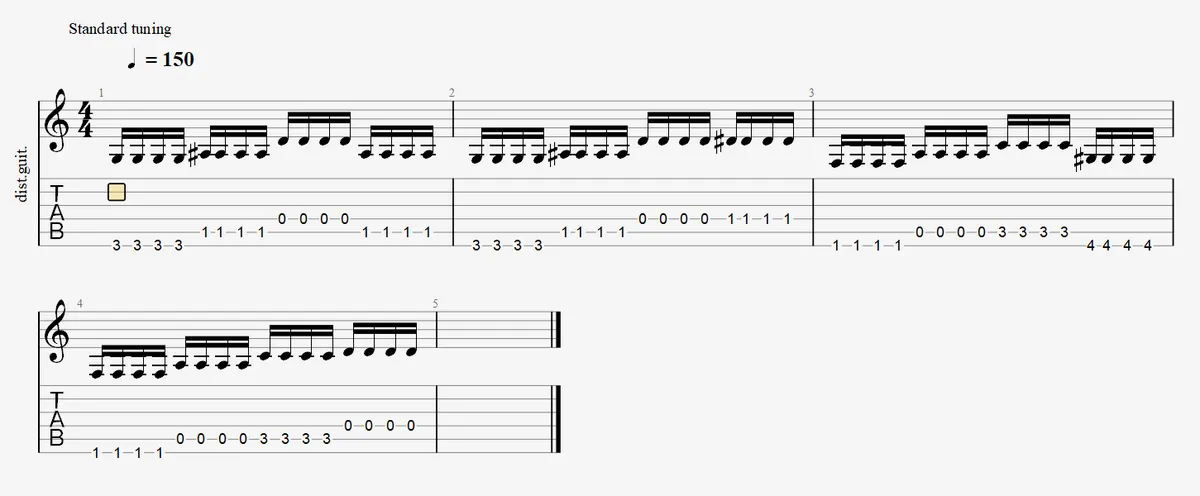
And second round:
And the diatonic dyad version for further understanding is this one:
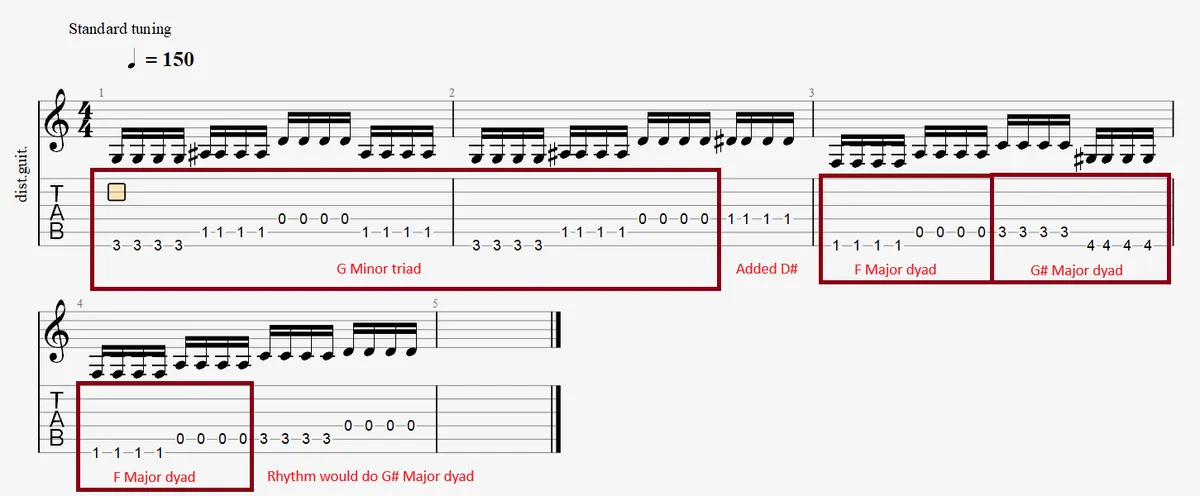
So the notes would be the following, changing to a F barre chord at the end of the second round:
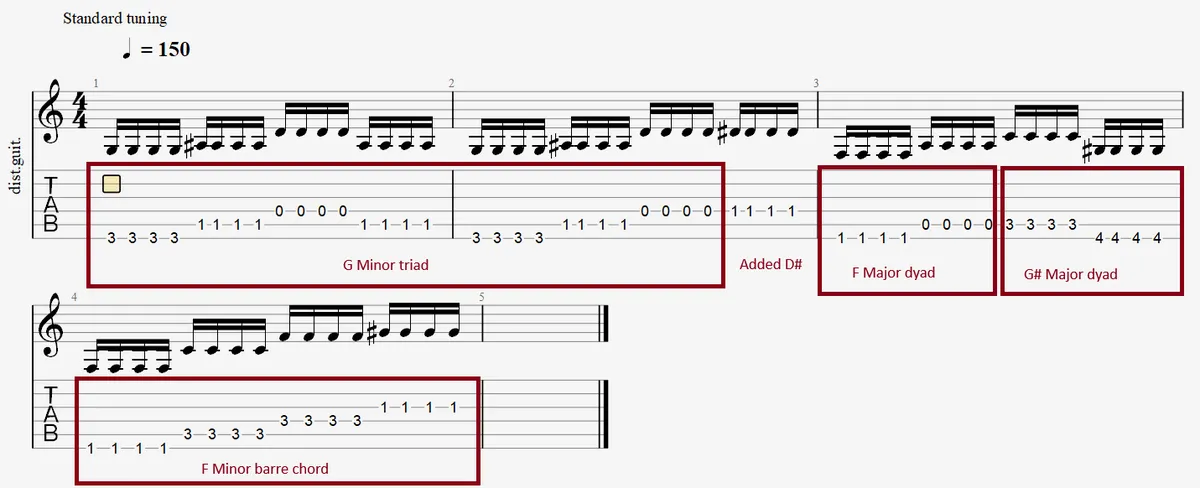
So, second round goes:
Voila, now you fully understand Funeral Fog, and all black metal songs derivative of these patterns.
Summary: Funeral Fog and the essence of black metal
So, going back to where we started. There has been a recurring tendency to play De Mysteriis riffs in a death-thrash sort of way, probably because some fans wrote the first tabs of this song way before Snorre and others disclosed this gimmicks. Which are the principles, then, that should guide your black metal tremolo picking technique, if you wanna do it second wave style? I suggest the following:
- No palm muting
- Picking like a mixer with tension on wrist
- If the melody is a dyad or triad, do these shapes instead of playing it like a lead/melody
- This means you play tremolos as arpeggios, "across strings" instead of "across frets"
- Allow notes to ring and cling to each other, avoiding to stand on the same string when you play a new note
With this, the balance will shift, giving more responsibilities to your picking hand, and allowing your fretting hand to be more lazy and behave more like a rhythm guitar rather than a lead. This will come with the biggest challenge that is to be able to hop from string to string doing tremolos that feel both precise and uninterrupted with each hop. Practicing the mixer picking or "tension" style developed by Euronymous and Snorre (here), and later cultivated by almost all second wave guitarists, is key to this.
Last but no least, it should be noted that this is also conclusive proof that the early Mayhem songs (such as Funeral Fog), which are earlier than everything else from Norway, already contains the signature riffs and the technique that set them apart from typical death-thrash riffing. Even before the Grymyrk demo from 1991, since the earliest Funeral Fog recording is from 1989 (Out from the Dark rehearsal). So if you see someone mistaken, believing that the first record with the arpeggio-tremolo "norse riff" is located at Grymyrk, you can simply show them this article, proving that Funeral Fog had the tremolos over chord shapes before that, in a simpler triad/dyad form.
Resources and examples:
(Mostly) Correct versions:
- https://www.youtube.com/watch?v=1S-Eay4cMIU
- https://www.songsterr.com/a/wsa/mayhem-funeral-fog-tab-s43010
Incorrect versions:
- https://www.youtube.com/watch?v=b-f-GOcKmBY
- https://tabs.ultimate-guitar.com/tab/mayhem/funeral-fog-guitar-pro-848733